What Actually Happens Inside a Protocol-Governed Execution

#12 — What Actually Happens Inside a Protocol-Governed Execution

Following a single blockchain transaction through the execution topology of Protocol-Governed Systems (PGS) In the previous post, we examined why the EU AI Act turns governance into an architectural problem — and why post-hoc monitoring cannot provide structural evidence of governed execution. That discussion was conceptual. This one is operational. Because eventually every architectural claim has to answer a simple question: “Show me what actually happens.” So let’s do exactly that. ...

April 2, 2026 · 8 min · 1571 words · Bhash Ganti
AI Changed Software Velocity. PGS Changes Software Architecture

#13 — AI Changed Software Velocity. PGS Changes Software Architecture

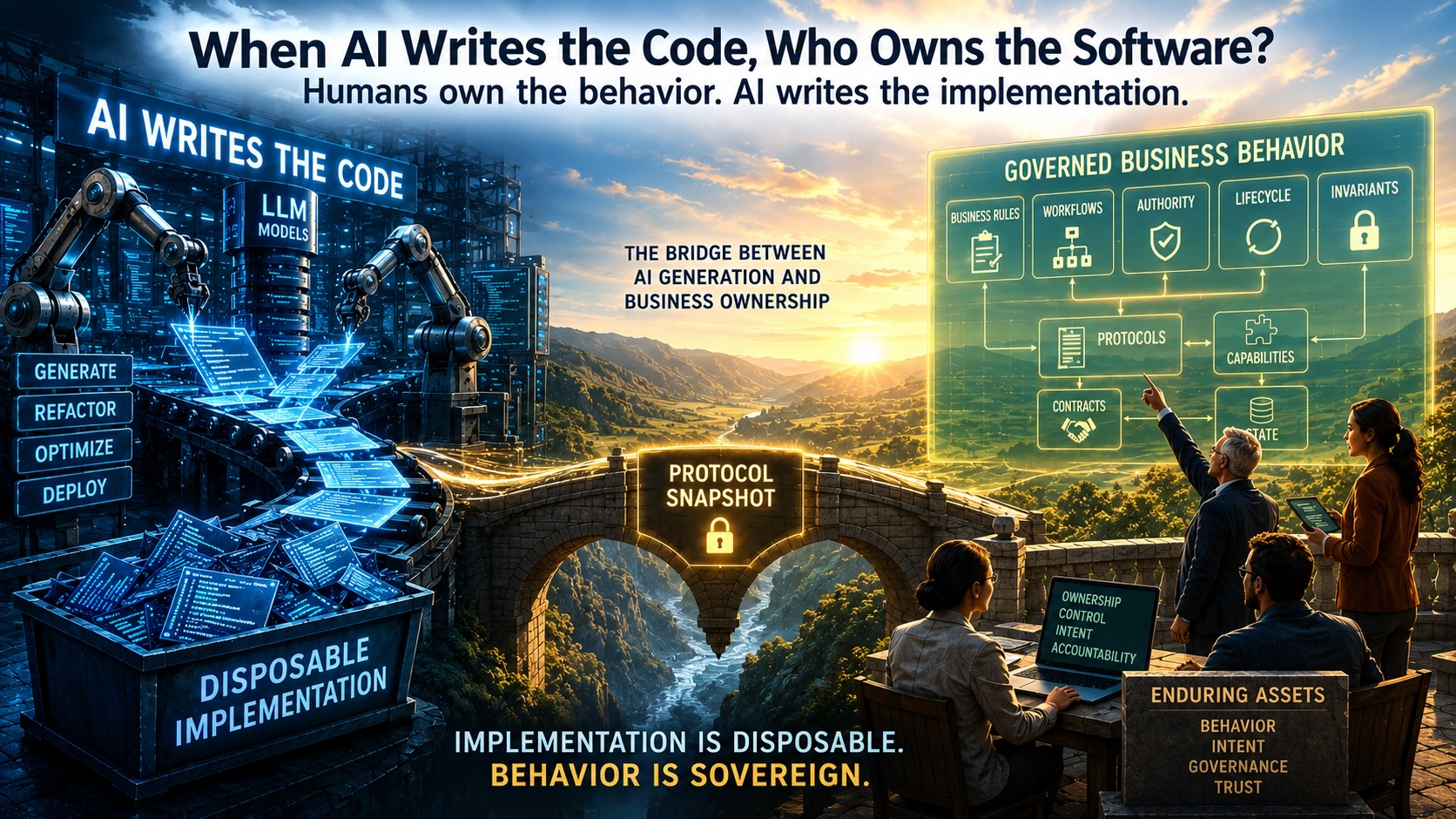
In the last few years, AI has dramatically accelerated software implementation velocity. Code generation. Agentic tooling. Autonomous orchestration. Self-modifying pipelines. Framework-assisted composition. Entire application layers can now be produced in hours instead of months. But underneath this acceleration, a deeper architectural problem is emerging: AI changed how fast we can build software. It did not change how software is fundamentally governed. And that distinction matters far more than most organizations currently realize. ...

April 9, 2026 · 8 min · 1580 words · Bhash Ganti
AI Didn't Break Your Software. It Broke the Assumptions Underneath It

#14 — AI Didn't Break Your Software. It Broke the Assumptions Underneath It

AI can now generate application layers faster than organizations can govern them. The bottleneck is no longer implementation. The bottleneck is admissibility — whether a piece of behavior should be allowed to exist at all, before it runs. Most modern SDLC tooling still assumes humans produce software slowly enough for governance to remain procedural: review, approve, release, monitor, patch. That assumption held for decades. It is now under pressure that none of its architects anticipated. ...

April 16, 2026 · 8 min · 1679 words · Bhash Ganti
My Backyard Taught Me To Build Safer Software

#15 — My Backyard Taught Me To Build Safer Software

I should tell you something about myself before we get into software architecture. When I am not writing Python code as a hobby, I am a regenerative backyard organic edible gardener — or at least I was, until a software project took on a life of its own and consumed most of my waking hours. More on that in a moment. First, the garden. The Garden That photo above is mine. Taken this morning. ...

April 23, 2026 · 6 min · 1134 words · Bhash Ganti
The Human Insight That Became an Architectural Inversion

#16 — The Human Insight That Became an Architectural Inversion

I want to tell you about a Sunday evening that changed the way I think about software. Not a Sunday spent debugging. Not a Sunday in front of a whiteboard. A Sunday with friends — the kind where conversation wanders into the places you usually avoid, and then someone says something that reorients you without meaning to. The Weight of Watching We were a small group, sitting together the way old friends do. At some point the topic turned to the conflict in Gaza. I do not remember exactly how we got there — these things find their way in. ...

April 30, 2026 · 7 min · 1338 words · Bhash Ganti
Protocol-Governed Systems: Your Governed Path to Risk Management

#17 — Protocol-Governed Systems: Your Governed Path to Risk Management

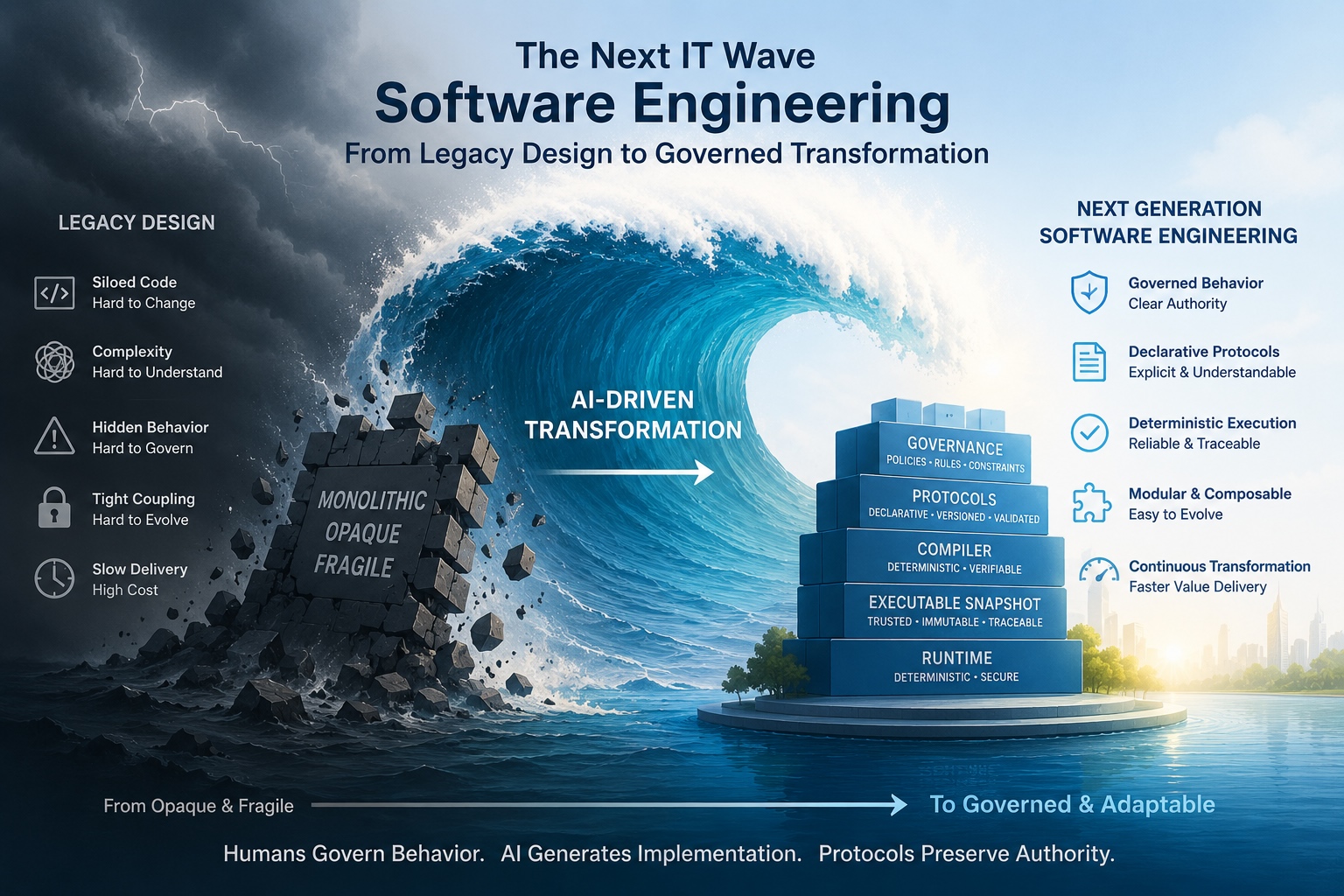
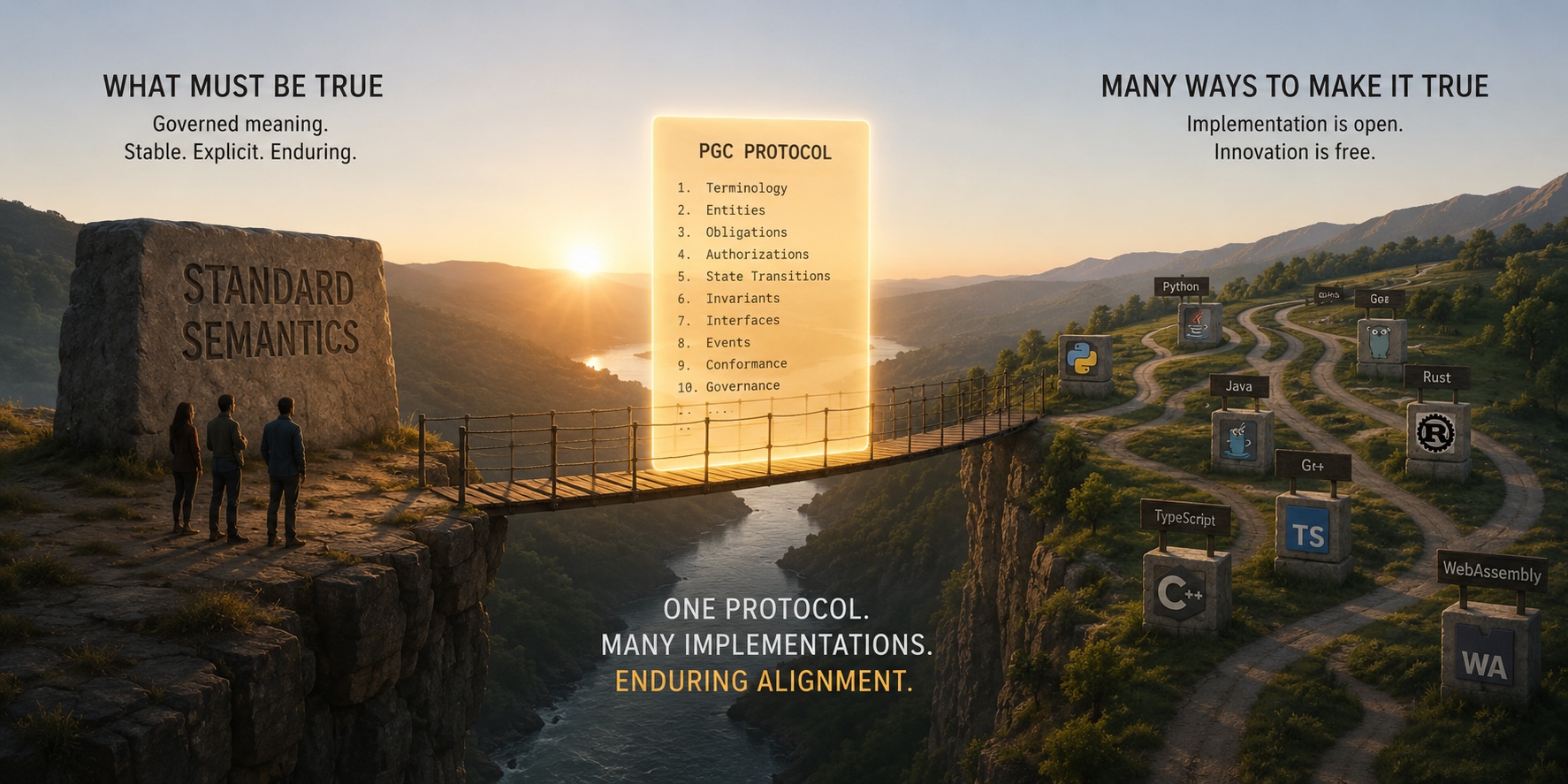
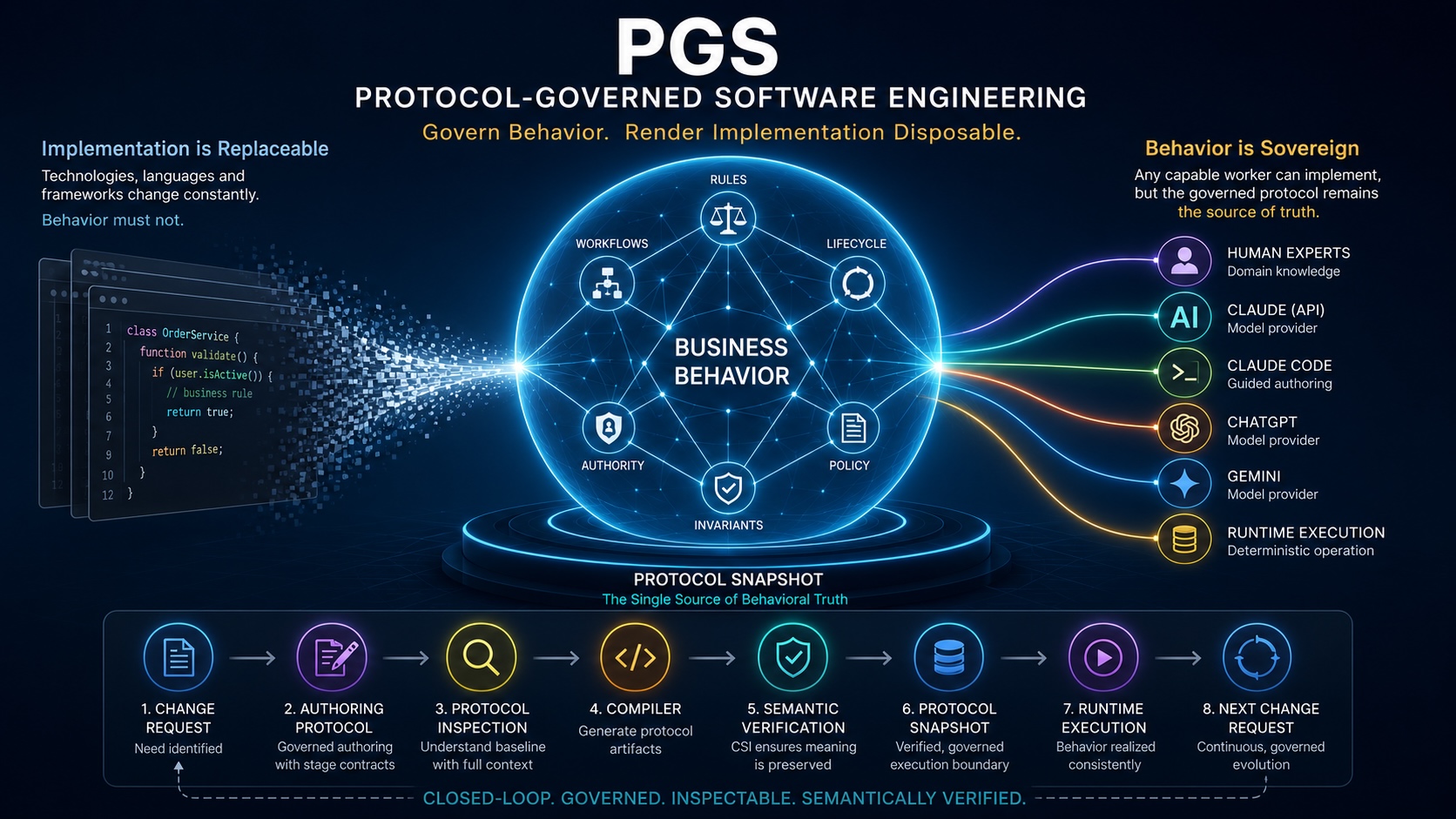
Governed by Protocol. Constructed by Compiler. Proven by Trace. A reference architecture for building deterministic, inspectable, AI-era software systems. Why this exists Modern software has a governance problem. As systems become: distributed, event-driven, AI-assisted, and increasingly machine-generated, the gap between: what engineers intended, and what software is actually allowed to do keeps widening. Behavior hides in: orchestration code, runtime conditionals, framework conventions, implicit routing, service glue, and increasingly, AI-generated implementation details. PGS explores a different model: ...

May 7, 2026 · 4 min · 722 words · Bhash Ganti